Substack has changed the game for creators, making it easy to start a paid newsletter and connect directly with your audience. But as popular as it is, Substack isn’t the only option—and for some creators, it might not even be the best fit.
Whether you’re looking for lower fees, more customization, or advanced growth tools, there are plenty of Substack alternatives that give you more control over your newsletter and monetization. In this guide, we’ll explore the top newsletter platforms in 2026, compare their features, and help you find the right fit for your audience and goals. Let’s dive in.
1. Why Look for Substack Alternatives?
Substack is a powerful platform that helped popularize paid newsletters, but it comes with limitations that might not suit every creator. Understanding why you might explore alternatives can help you choose a platform that better aligns with your goals.
Some common reasons creators look for Substack alternatives include:
- High fees. Substack takes a 10% platform fee on paid subscriptions, plus payment processing fees. For creators with large audiences, this can add up quickly.
- Limited customization. Substack’s design and branding options are relatively basic, which may not reflect your unique brand identity.
- Monetization flexibility. Substack mainly focuses on paid subscriptions. Platforms that support multiple revenue streams—like sponsorships, one-time payments, or product integrations—can be more appealing.
- Platform dependency. Relying solely on Substack means your audience and revenue are tied to a single platform. Some creators prefer platforms that can integrate with their own website or other tools.
According to Muck Rack’s 2025 Creator Economy report, newsletters remain one of the fastest-growing channels for independent creators, with 41% of professional creators monetizing via email newsletter. Exploring alternatives ensures you can maximize your earnings and growth while retaining control over your content.
2. Criteria for Choosing a Newsletter Platform
 The right newsletter platform should help you grow, monetize, and truly own your audience
Choosing the right newsletter platform goes beyond picking the one with the flashiest interface. The best platform for you depends on your goals, audience size, and how you plan to monetize your content. Here are the key factors to consider:
- Pricing & Revenue Share: Look at platform fees, payment processing costs, and whether you can keep a larger share of your earnings. Lower fees can make a huge difference if you have a growing subscriber base.
- Ease of Use: Platforms should make it simple to create, schedule, and send newsletters without a steep learning curve. The easier it is to use, the more consistently you’ll publish.
- Customization & Branding: The ability to match your newsletter to your brand—including colors, fonts, and layouts—can help you stand out and feel professional.
- Audience Growth Tools & Analytics: Features like referral programs, social sharing options, and robust analytics allow you to track growth and engagement. Knowing what works helps you optimize over time.
- Monetization Features: Beyond subscriptions, some platforms allow sponsorships, paywalls, premium content tiers, or integration with other products. If you plan to diversify revenue, check which tools support that.
- Integrations: Consider whether the platform connects with your website, social media, email marketing tools, or e-commerce platforms. Seamless integration saves time and keeps your workflow efficient.
By weighing these criteria, you can narrow down Substack alternatives to the platforms that best fit your needs as a creator.
Learn more: How Do Podcasts Make Money? A Complete Guide
3. Best Substack Alternatives in 2026
Here’s a curated list of the top Substack alternatives for creators in 2026. Each platform has unique strengths, pricing models, and features—so you can find one that fits your newsletter goals.
| Platform | Pricing / Fees | Key Features | Monetization Options | Best For |
|---|---|---|---|---|
| Ghost | $11+/month (managed) or self-hosted free | Full customization, SEO, membership tiers, analytics | Paid subscriptions, one-time payments, tiered memberships | Creators who want full ownership and flexibility |
| Beehiiv | Free / $29+/month | Referral growth tools, analytics, paid subscriptions | Paid subscriptions | Growth-focused creators scaling newsletters quickly |
| ConvertKit | Free / $15+/month | Automation, segmentation, landing pages, integrations | Paid subscriptions, digital products | Creators combining newsletters with marketing and sales |
| MailerLite | Free / $10+/month | Drag-and-drop editor, automation, landing pages | Paid subscriptions (limited) | New creators or small newsletters on a budget |
| Patreon | 5–12% fees + processing | Membership tiers, exclusive content, community | Paid subscriptions, exclusive perks | Creators who want multi-content monetization and community building |
| TinyLetter | Free | Simple editor, subscriber management | None | Beginners or hobbyists seeking simple text-based newsletters |
3.1 Ghost
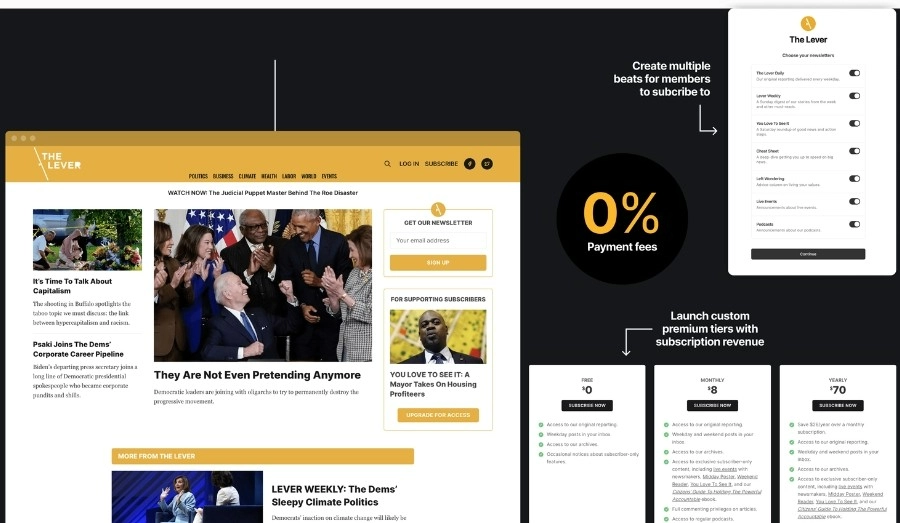
- Full Customization: Customize your newsletter design, website layout, and subscription pages to match your brand.
- Membership & Monetization: Offer recurring paid subscriptions, one-time payments, or tiered memberships.
- Advanced Analytics: Track subscriber growth, engagement metrics, and content performance.
- SEO & Blogging: Built-in SEO tools to help your newsletter content get discovered online.
- Integrations: Connect with tools like Zapier, Stripe, and email marketing platforms.
- Self-hosted: Free (you pay hosting separately)
- Managed Ghost plans: Start at $11/month (billed annually)
- Enterprise plans available for advanced features and large audiences
- Complete control over content and branding
- Supports multiple revenue streams
- Professional, polished appearance suitable for serious creators
- Slightly steeper learning curve compared to Substack or Revue
- Self-hosting requires technical knowledge
- Setup can be more time-consuming
- Creators who want ownership of their content
- Newsletters that are part of a larger content strategy (website + blog)
- Professional creators looking to scale and diversify revenue beyond subscriptions
3.2 Beehiiv
- Referral & Growth Tools: Built-in referral programs to encourage subscribers to invite others, boosting organic growth.
- Paid Subscriptions: Easy setup for paid tiers and recurring revenue.
- Advanced Analytics: Cohort tracking, open rates, click rates, and subscriber retention metrics.
- Integrations: Connect with tools like Zapier, Slack, and payment processors to automate workflows.
- Import & Migration: Easy migration from Substack or other platforms without losing subscribers.
- Free plan available with core features
- Paid plans start at $29/month, scaling with subscriber count and advanced tools
- Strong growth-focused features ideal for scaling newsletters
- Flexible monetization options
- Easy migration from Substack and other platforms
- Design customization is more limited compared to Ghost
- Free plan has some feature limitations
- Still a relatively new platform, so fewer community resources
- Creators aiming to scale quickly
- Those focused on paid subscriptions and audience growth
- Creators migrating from Substack who want growth-oriented analytics
3.3 Kit
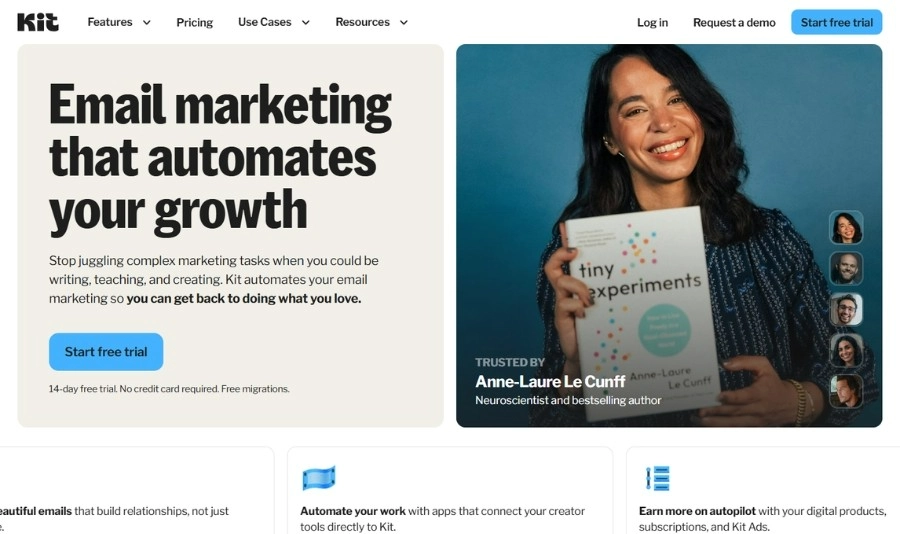
- Paid Newsletters & Subscriptions: Monetize content with recurring subscriptions or one-time purchases.
- Email Automation: Create sequences, funnels, and drip campaigns to nurture subscribers.
- Segmentation & Tagging: Organize subscribers by interests, behavior, or engagement for targeted campaigns.
- Integrations: Works with platforms like Shopify, WordPress, Teachable, and Zapier.
- Landing Pages & Forms: Build sign-up forms and landing pages to grow your audience without a website.
- Free plan available for up to 1,000 subscribers (basic features)
- Paid plans start at $15/month, scaling with subscriber count and access to advanced automation
- Strong automation and segmentation for professional creators
- Supports monetization beyond newsletters
- Integrates easily with other creator tools and platforms
- Design flexibility is more limited for newsletter layouts
- Slightly more complex than Substack for beginners
- Can become expensive as your subscriber list grows
- Creators who want email marketing + newsletters in one platform
- Those selling digital products, courses, or other offerings alongside newsletters
- Creators looking for advanced automation and segmentation
3.4 MailerLite
- Drag-and-Drop Editor: Easily design newsletters without any coding knowledge.
- Automation & Workflows: Send automated emails based on subscriber behavior.
- Landing Pages & Signup Forms: Capture new subscribers and grow your audience.
- Basic Analytics: Track open rates, click-through rates, and subscriber growth.
- Integrations: Connects with Shopify, WordPress, Zapier, and other tools.
- Free plan: Up to 1,000 subscribers with limited automation features
- Paid plans: Start at $10/month, scaling with subscriber count and features
- Budget-friendly, ideal for creators just starting
- User-friendly interface and easy to learn
- Includes basic automation and landing pages
- Advanced features are limited compared to Ghost or Beehiiv
- Newsletter design flexibility is basic
- Analytics are relatively simple
- New creators or small newsletters who want a low-cost solution
- Creators who need a simple, straightforward platform
- Those who want to start sending newsletters quickly without complexity
3.5 Patreon
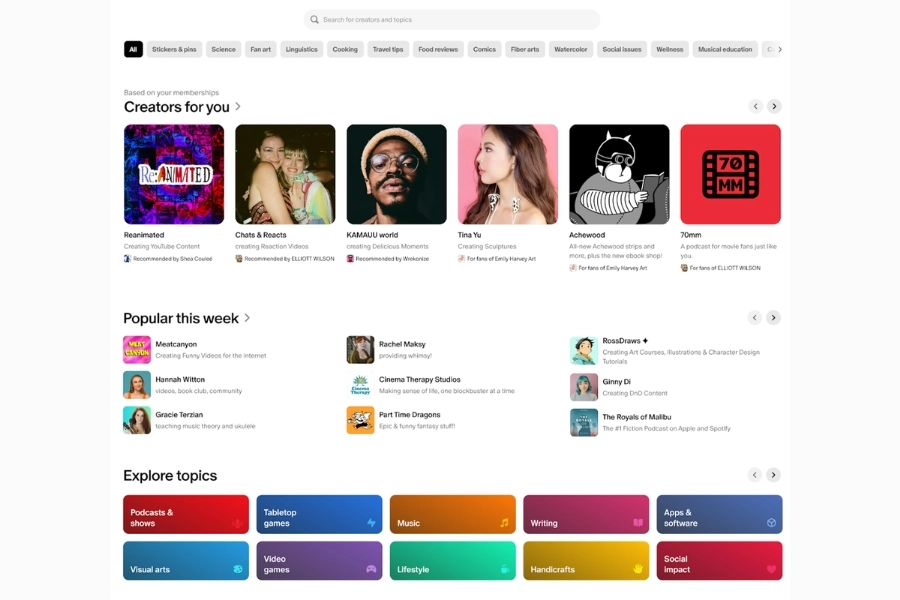
- Paid Membership Tiers: Offer different levels of access and benefits to subscribers.
- Exclusive Content Distribution: Send newsletters, posts, or digital downloads to patrons.
- Community Engagement: Comment sections and private posts keep subscribers connected.
- Analytics: Track subscriber growth, revenue, and engagement metrics.
- Integration: Works with Discord, Shopify, and Zapier for additional functionality.
- Combine newsletters with other revenue streams (courses, videos, etc.)
- Strong audience engagement and community-building tools
- Easy to manage memberships and payments
- Less focused on traditional newsletter formatting and design
- Fees can be higher than dedicated newsletter platforms
- Limited automation features for email campaigns
- Creators who want a multi-content membership model
- Those who plan to monetize beyond newsletters
- Artists, podcasters, or educators building a community around their work
3.6 TinyLetter
- Simple Editor: Focus entirely on writing without worrying about design or complex tools.
- Free to Use: Completely free, no paid plans or hidden fees.
- Subscriber Management: Basic subscriber tracking and list management.
- Easy Setup: Quick account creation and newsletter distribution, ideal for beginners.
- Extremely easy to use with no learning curve
- Free platform, great for testing newsletter ideas
- Focus on content rather than design or features
- No monetization features for paid subscriptions
- Minimal design and branding options
- Analytics and growth tools are very basic
- Beginners testing the waters with newsletters
- Creators who want a lightweight, distraction-free writing experience
- Writers focused on text-based communication without needing advanced features
4. Trends in Newsletter Platforms
- Shift toward creator-owned platforms. More creators are moving away from platform dependency and choosing tools that give them full control over their audience, data, and revenue. This is why platforms like Ghost are gaining traction.
- Growth-focused features are becoming standard. Platforms are no longer just for sending emails. Tools like Beehiiv are building referral systems, audience insights, and viral loops directly into the product.
- Monetization beyond subscriptions. While paid newsletters are still popular, creators are expanding into sponsorships, digital products, and memberships. Platforms that support multiple revenue streams are becoming more valuable.
- Automation and AI integration. Newsletter platforms are starting to include AI tools for writing, subject line optimization, and audience segmentation. This helps creators produce content faster and improve performance.
- Multi-channel distribution. Newsletters are no longer standalone. Creators are combining email with blogs, social media, and communities to build a more resilient audience strategy.
Turn Your Newsletter Into a Scalable Business
Choosing the right platform is just the first step. The real opportunity is turning your newsletter into something bigger—something you actually own and scale.
With SprouX, you can go beyond writing emails. Test your ideas, validate demand, and turn your knowledge into paid products—before spending months building them.
If you’re already growing a newsletter, don’t stop at content. Start building a creator business with SprouX.