In the early days of the creator economy, success was often measured by one thing: audience size. More followers meant more reach, more visibility, and potentially more opportunities. But as platforms evolve and algorithms become less predictable, many creators are realizing that audience growth alone doesn’t guarantee long-term stability.
That’s why the focus is shifting toward building a creator community. Instead of simply broadcasting content to followers, creators are creating spaces where members interact, share ideas, and build relationships around shared interests. These communities can live on platforms like Discord, Circle, Skool, or newer social ecosystems such as Beincom.
In this guide, we’ll explore why creator communities matter and how to build one that grows sustainably. Let's get started!
1. What Is a Creator Community?
A creator community is a group of people who gather around a creator not just to consume content, but to interact, learn, and connect with each other through shared interests. Unlike a traditional audience, where communication mostly flows from the creator to followers, a community encourages participation, discussion, and collaboration among members.
In a creator community, the relationship becomes more dynamic. Members share ideas, ask questions, support one another, and often contribute their own experiences. The creator still plays a central role, but the value of the space comes from collective participation rather than one-way broadcasting.
1.1 Audience vs Community: The Critical Difference
Many creators assume that having a large following automatically means they have a community. In reality, the two are very different.
An audience is mostly passive. Followers watch videos, read posts, or like updates, but interaction between followers themselves is limited. Most engagement happens directly between the creator and individual viewers.
A community, by contrast, creates a network of relationships. Members interact with each other, exchange ideas, and build connections around shared interests. The creator acts more like a facilitator who guides conversations and nurtures engagement.
This shift from audience to community is what transforms content into something more sustainable. Instead of relying entirely on algorithms to distribute posts, creators build environments where people actively choose to participate.
1.2 Why Creator Communities Are Growing Fast
Several trends in the creator economy are pushing more creators to focus on community building instead of just audience growth.
- Platform algorithms are unpredictable. Engagement on social media can fluctuate significantly when platforms change how content is distributed. Communities provide a more stable connection because members intentionally join and participate.
- Direct relationships are becoming more valuable. When creators communicate with their most engaged followers in dedicated spaces, they build stronger trust and loyalty.
- Communities unlock opportunities beyond content consumption. They create environments where collaboration, feedback, learning, and even product development can happen naturally.
For many creators, a community becomes the foundation for long-term growth rather than just another engagement channel.

2. Why Building a Creator Community Matters
For many creators, the goal used to be simple: grow a large audience and maximize reach. But as the creator economy becomes more competitive, relying only on followers and views is becoming less sustainable. This is where building a creator community creates a major advantage.
A strong community transforms content from something people occasionally consume into something people actively participate in. It deepens relationships, strengthens loyalty, and opens the door to long-term opportunities beyond content alone.
2.1 Stronger Engagement and Loyalty
Community members are naturally more engaged than passive followers. Instead of simply liking or watching content, they participate in discussions, share ideas, and interact with other members.
This kind of participation creates a stronger emotional connection with the creator and the space they’ve built. Over time, these engaged members often become the most loyal supporters, helping sustain the community and welcoming new members.
2.2 More Stable Revenue Opportunities
Communities also make monetization more sustainable. When creators build a dedicated group of engaged members, they can introduce products, memberships, or exclusive experiences that feel valuable rather than promotional.
Because trust already exists within the community, members are often more willing to support the creator through paid offerings, events, or educational products.
2.3 Better Feedback and Product Validation
Another major advantage of a creator community is direct feedback. Instead of guessing what their audience wants, creators can ask questions, run discussions, or observe conversations within the community.
This feedback loop helps creators refine ideas, test new concepts, and validate products before investing significant time and effort into building them.
2.4 Long-Term Brand and Ecosystem Growth
Perhaps the biggest benefit of building a creator community is long-term stability. Algorithms change, platforms evolve, and content trends come and go. But communities built around shared interests and meaningful interaction tend to last much longer.
Over time, these communities can grow into ecosystems where creators launch new initiatives, collaborate with members, and expand their impact beyond individual pieces of content.

3. The Foundations of a Strong Creator Community
Not every community succeeds. Some groups start with excitement but quickly become inactive because there is no clear purpose or structure. Building a creator community requires more than simply opening a group or server. It starts with a strong foundation that gives people a reason to join, participate, and stay.
Successful creator communities usually share several core elements that shape how members interact and what the community represents.
3.1 A Clear Niche and Shared Identity
The strongest communities are built around a specific interest, problem, or identity. When the focus is too broad, members often struggle to see why the community exists or how they fit into it.
Creators who define a clear niche make it easier for people to feel connected. Members join not only because they follow the creator, but because they share similar goals, challenges, or passions with others in the group.
3.2 A Core Mission or Value System
Communities grow stronger when there is a shared purpose behind them. This purpose might be learning a specific skill, supporting creative work, discussing industry trends, or building something together.
A clear mission helps guide conversations and sets expectations for what the community stands for. It also helps attract members who resonate with the same values.
3.3 Consistent Communication Channels
A community needs a space where members can interact regularly. This might be a chat-based environment, a forum-style platform, or a structured community hub.
Different platforms serve different purposes. For example, real-time discussions often work well on Discord, while structured learning communities may use platforms like Circle, Skool, or creator-focused ecosystems such as Beincom that combine social interaction with creator monetization tools.
Choosing the right environment makes it easier for members to participate naturally.
3.4 Community Culture and Norms
Culture is what ultimately shapes how a community behaves. It defines whether conversations are supportive, competitive, collaborative, or purely informational.
Creators influence culture through how they interact with members, how discussions are moderated, and what types of behavior are encouraged. Over time, these patterns form the identity of the community and determine whether people feel comfortable contributing.
A strong foundation built on niche clarity, shared purpose, communication structure, and healthy culture gives a creator community the stability it needs to grow.

4. Platforms for Building a Creator Community
Once the foundation of your community is clear, the next step is choosing where the community will live. The platform you choose shapes how members interact, how conversations flow, and how easily the community can grow over time.
There is no single “best” platform for building a creator community. The right choice depends on your content style, the type of interaction you want, and how structured your community needs to be.
4.1 Social Media-Based Communities
Many creators start building communities directly on social platforms because their audience is already there. These spaces are easy to launch and require little setup.
Platforms like Discord, Facebook Groups, and Telegram allow creators to gather followers into a shared space where discussions can happen more naturally than in comment sections.
However, these platforms still operate within the broader ecosystem of social media. Creators often have limited control over algorithms, visibility, and long-term data ownership.
4.2 Creator-Owned Community Platforms
As communities grow, many creators move to dedicated platforms designed specifically for community building. These platforms offer more structure, better organization, and additional tools for engagement.
Examples include Circle, Skool, and Kajabi, which allow creators to combine discussions, courses, events, and memberships within a single environment.
These platforms are often used by creators who want to build paid communities or integrate educational products alongside discussions.
4.3 Emerging Social Ecosystems for Communities
A newer category of platforms is emerging that blends social networking with creator communities and digital ownership.
For example, platforms like Beincom are designed to support community-driven ecosystems where creators can build social hubs, organize discussions, and connect engagement directly with creator economies.
These types of platforms aim to give creators more control over their communities while encouraging deeper interaction between members.
4.4 Choosing the Right Platform
Instead of asking which platform is the best overall, creators should consider what type of experience they want their community to have.
Some communities thrive in fast-moving chat environments, while others benefit from structured discussions and educational content. The most effective choice is usually the platform that aligns with how members naturally interact and how the creator plans to develop the community over time.
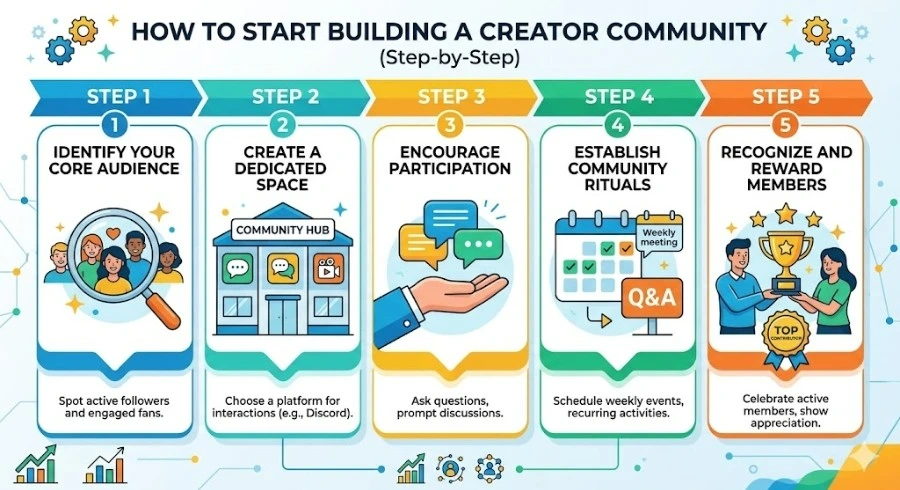
5. How to Start Building a Creator Community (Step-by-Step)
Building a creator community doesn’t happen overnight. Even the most successful communities usually start small, with a handful of highly engaged members who share similar interests. The goal in the early stages is not scale, but participation.
By focusing on interaction and value from the beginning, creators can gradually turn followers into active community members.
5.1 Identify Your Core Audience
The first step in building a creator community is understanding who the community is actually for. Not every follower will want to join a community space, and that’s completely normal.
Instead, focus on identifying the most engaged part of your audience — the people who consistently comment, reply, ask questions, or participate in discussions. These early supporters often become the foundation of your community.
When creators clearly define who the community serves, it becomes easier to shape conversations, content, and activities around shared interests.
5.2 Create a Dedicated Space for Interaction
A community needs a space where members can interact regularly. This space should feel different from typical social media comment sections, where conversations are often fragmented and short-lived.
Many creators launch their communities using platforms like Discord, Circle, or Skool, depending on how structured they want discussions to be.
The key is creating an environment where members feel comfortable sharing ideas, asking questions, and interacting with both the creator and other members.
5.3 Encourage Participation Early
In the beginning, communities can feel quiet if members are unsure how to participate. Creators often need to actively guide conversations to help people feel comfortable contributing.
Simple actions like asking open-ended questions, starting discussion threads, or inviting members to introduce themselves can help spark early engagement. The goal is to shift the dynamic from passive observation to active participation.
5.4 Establish Community Rituals
Successful communities often develop recurring activities that members look forward to. These rituals create consistency and give members reasons to return regularly.
Examples might include weekly Q&A sessions, content breakdown discussions, member showcases, or themed discussion days. Over time, these activities help shape the identity and rhythm of the community.
5.5 Recognize and Reward Members
Early community members play a crucial role in shaping culture. Recognizing their contributions can strengthen engagement and encourage others to participate.
Creators often highlight active members, respond thoughtfully to questions, or create small recognition systems within the community. These gestures signal that participation matters and that members are valued contributors rather than just followers.
When creators focus on participation, structure, and recognition, even a small community can quickly grow into an active and supportive space.
6. Growing and Sustaining a Creator Community
Starting a community is one challenge. Keeping it active as it grows is another. Many creator communities launch with strong enthusiasm but lose momentum over time if engagement slows down or conversations become repetitive.
To build a community that lasts, creators need to focus not only on growth but also on maintaining healthy interaction and a clear culture.
6.1 Encourage Member-to-Member Interaction
One of the biggest signs of a healthy community is when conversations happen without the creator needing to initiate every discussion. When members begin helping each other, sharing ideas, and starting conversations on their own, the community becomes more sustainable.
Creators can encourage this behavior by asking questions that invite different perspectives, highlighting thoughtful member responses, and creating spaces for peer discussions.
6.2 Maintain a Clear Community Culture
As communities grow, maintaining a positive culture becomes increasingly important. Clear guidelines help ensure that discussions remain respectful, constructive, and aligned with the purpose of the community.
Creators don’t need overly strict rules, but setting expectations for behavior early helps prevent misunderstandings and keeps the environment welcoming for new members.
6.3 Introduce New Activities and Content
Communities thrive when there is something new to participate in. While organic discussions are valuable, occasional structured activities help maintain energy and engagement.
Creators often introduce live sessions, themed discussions, collaborative challenges, or community-driven projects to keep the environment dynamic. These activities give members reasons to return and continue participating.
6.4 Empower Core Community Members
As a community grows, some members naturally become more active than others. These individuals often help guide discussions, answer questions, and support new members.
Recognizing and empowering these core members—sometimes as moderators or community ambassadors—can help maintain engagement without requiring the creator to manage every interaction personally.
Over time, strong communities become partially self-sustaining because members feel responsible for maintaining the space.
7. Monetizing a Creator Community
Once a creator community becomes active and engaged, it naturally opens the door to monetization opportunities. The key difference is that monetization in a community-driven environment feels more organic. Instead of selling to a passive audience, creators are offering value to people who already trust their work.
When done thoughtfully, community monetization can support both the creator and the members by providing deeper experiences, learning opportunities, or exclusive access.
7.1 Membership and Subscription Models
One of the most common ways to monetize a creator community is through memberships. In this model, members pay a monthly or yearly fee to access exclusive discussions, private groups, or premium resources.
Membership communities often include benefits such as deeper conversations, private Q&A sessions, or members-only content. Because the value comes from ongoing interaction rather than a one-time product, memberships can create more predictable recurring revenue.
7.2 Courses and Educational Programs
Communities are also powerful environments for learning. Creators who share expertise in a specific niche often turn their communities into learning hubs where members can develop new skills.
Courses, workshops, and guided programs can be introduced naturally within the community. Members who are already engaged are more likely to enroll because they trust the creator and see the value of the knowledge being shared.
7.3 Digital Products and Resources
Another approach is offering digital products designed to help community members achieve specific goals. These might include templates, toolkits, guides, or other resources that solve common problems within the niche.
Because creators understand their community’s challenges through direct interaction, they can design products that address real needs rather than guessing what the audience wants.

7.4 Brand Partnerships and Collaborations
Communities can also attract brand partnerships. Brands often look for creators who have not just large audiences but highly engaged groups of followers who trust their recommendations.
When partnerships align with the community’s interests, they can feel less like advertising and more like relevant opportunities that benefit both the brand and the members.
A well-developed creator community creates multiple monetization pathways while maintaining trust and authenticity. Instead of relying on a single revenue stream, creators can build a sustainable ecosystem around their expertise and relationships.
Read more: Best Digital Products to Sell for Creators
8. Final Thought
Building a creator community is no longer just an optional strategy. As social media algorithms become more unpredictable and audiences look for deeper connections, communities are becoming one of the most valuable assets a creator can build.
A strong community transforms passive followers into active participants. It creates a space where conversations happen naturally, members support each other, and creators can develop ideas, products, and opportunities with direct feedback from their audience.
More importantly, communities shift the creator model from short-term attention to long-term relationships. Instead of relying only on views, likes, or viral moments, creators can build ecosystems where engagement, collaboration, and trust drive sustainable growth.
For many creators today, the real value is not just in producing content—but in building spaces where people gather around shared interests and learn from each other.
If you're thinking about turning your audience into something more sustainable, the next step isn’t just creating more content—it’s building systems around your ideas.
SprouX helps creators transform their knowledge and expertise into structured digital products and community-driven experiences. Instead of guessing whether an idea will work, creators can validate concepts, launch knowledge-based products, and grow communities around their expertise.
Start exploring how your knowledge can grow into a creator ecosystem with SprouX.