Creating an online course has become one of the most effective ways to turn knowledge into income. Whether you’re a creator, freelancer, or professional, a well-structured digital course allows you to share what you know while building a scalable revenue stream.
The best part? You don’t need a massive audience or expensive tools to get started. In this guide, you’ll learn how to create an online course step by step—from choosing the right idea to building, launching, and monetizing your course effectively.
1. What Is an Online Course?
An online course is a structured way to deliver knowledge or skills through digital content. Instead of teaching in person, you package your expertise into lessons that people can access anytime, from anywhere.
A typical digital course is organized into modules and lessons, each designed to guide learners toward a specific outcome. The goal isn’t just to share information—it’s to help students achieve a clear result.
Online courses can take different formats depending on your style and topic. Some are video-based, while others use text, templates, or a mix of formats. There are also cohort-based courses, where students learn together over a set period with live interaction.
What makes online courses powerful is their scalability. Once created, a course can be sold repeatedly without requiring your time for each new student. That’s why more creators are shifting from one-time services or content into building digital course products that generate long-term value.
2. Why Create an Online Course?
Creating an online course isn’t just about sharing knowledge—it’s about building something that scales beyond your time.
- Scalable income. Unlike services or freelance work, a digital course can be sold repeatedly without requiring additional effort for each customer.
- Ownership and control. Instead of relying only on platforms or brand deals, you own the product, the pricing, and the customer relationship.
- Build authority. Teaching a topic positions you as someone who understands it deeply, helping you stand out in your niche.
- Long-term value. A course is not just content—it’s an asset that can generate income over time and be updated or expanded as you grow.
- Deeper audience connection. Courses allow you to go beyond surface-level content and actually help people achieve real results.
For many creators, moving into online courses is the shift from “creating content” to building a real business.
3. Step-by-Step: How to Create an Online Course
Creating an online course doesn’t have to be complicated. The key is to focus on clarity and progress—helping learners move from a problem to a specific outcome.
Here’s how to do it step by step:
3.1 Choose a Profitable Course Idea
The biggest mistake beginners make is choosing a topic that’s too broad or too vague.
Instead of teaching everything you know, focus on solving one specific problem for a specific audience. The more targeted your course is, the easier it is to sell and deliver results.
A good course idea usually sits at the intersection of:
- What you know
- What people are actively struggling with
- What they are willing to pay to solve
3.2 Validate Your Idea Before Creating
Before you spend weeks building a course, make sure people actually want it.
Validation helps you avoid creating something no one buys. You don’t need complicated research—simple methods work best:
- Ask your audience directly
- Share your idea and collect feedback
- Offer a pre-sale or early access
If people are willing to commit early, it’s a strong signal your idea is worth building.
3.3 Structure Your Course Content
Once your idea is validated, the next step is turning it into a clear learning path.
Think in terms of transformation, not just content. Break your course into modules, and each module into lessons that move the learner closer to the final outcome.
Keep it simple:
- Start with the basics
- Build step by step
- Focus on what learners need to take action
- Avoid adding unnecessary content. More isn’t better—clear and actionable is.
3.4 Create Your Course Content
Now it’s time to actually build the course.
You don’t need high-end production. Many successful courses are created with simple tools. What matters most is clarity and usefulness.
You can choose different formats:
- Video lessons
- Written guides
- Templates or resources
- A mix of formats
Start simple and improve later. The goal is to get your first version live, not perfect.
3.5 Choose a Platform or Free Course Creator
To deliver your course, you’ll need a platform.
Some tools act as a free course creator or free course maker, allowing you to build and host your course without upfront costs. Others provide more advanced features for scaling and monetization.
When choosing a platform, consider:
- Ease of use
- Pricing and fees
- Customization and branding
- Payment and delivery options
The right platform should support your workflow, not complicate it.
Read more: Top 9 Essential Tools for Content Creators
3.6 Price and Launch Your Course
Pricing is not just about numbers—it’s about perceived value.
You can start with a lower price for early users, gather feedback, and then increase it over time. Some creators also launch with a pre-sale model, selling the course before it’s fully built.
Focus on:
- Clear outcome (what students will achieve)
- Simple offer structure
- Early feedback from real users
Launching early allows you to improve your course based on real demand instead of assumptions.

Choosing the right platform can make a big difference in how easily you create, launch, and scale your course. The good news is that there are several free course creator and free course maker tools that let you get started without upfront costs.
Here are some of the most popular options:
4.1 Teachable
Teachable is one of the most well-known platforms for creating and selling online courses. It offers a beginner-friendly interface with all the essential tools needed to launch quickly.
Key Highlights:
- Easy course builder with video, text, and quiz support
- Built-in payment processing
- Free plan available with transaction fees
Best For:
Beginners who want a simple, all-in-one platform to start their first course.
4.2 Thinkific
Thinkific is a flexible platform that allows creators to build and customize their courses with more control compared to some alternatives.
Key Highlights:
- Free plan with core features
- Customizable course structure
- No transaction fees on paid plans
Best For:
Creators who want more flexibility and control over course design.
4.3 Gumroad
Gumroad is a simple platform for selling digital products, including courses. It’s not a traditional course builder but works well for lightweight course delivery.
Key Highlights:
- Easy setup for selling digital content
- No monthly fee (takes a percentage of sales)
- Supports files, memberships, and bundles
Best For:
Creators who want to sell a course quickly without building a complex learning system.
4.4 Podia
Podia combines courses, memberships, and digital downloads into one platform, making it a versatile option for creators.
Key Highlights:
- All-in-one platform for courses and memberships
- Simple user interface
- Free plan available (limited features)
Best For:
Creators who want to bundle courses with other digital products.
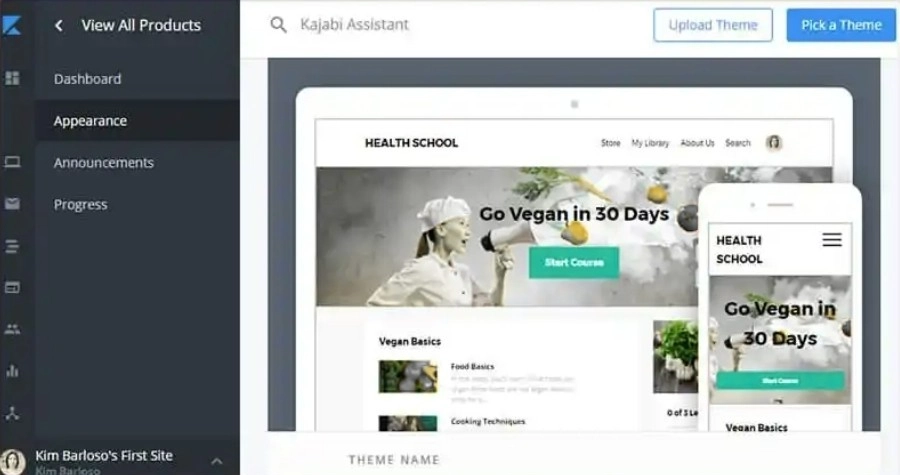
4.5 Kajabi
Kajabi is a premium platform designed for creators who want advanced marketing, automation, and course hosting in one place.
Key Highlights:
- Advanced automation and funnels
- Built-in marketing tools
- No free plan (paid only, higher cost)
Best For:
Creators ready to scale and invest in a full business system.
Each of these tools can work as a free course maker depending on your needs. The key is to choose a platform that matches your current stage—simple if you’re starting, more advanced if you’re scaling.
5. Common Mistakes When Creating a Digital Course
Creating an online course sounds straightforward, but many creators struggle—not because they lack knowledge, but because they approach it the wrong way.
Here are the most common mistakes to avoid:
5.1 Building Before Validating
One of the biggest mistakes is spending weeks (or months) creating a course before knowing if anyone actually wants it.
Without validation, you’re guessing. And guessing often leads to low sales or no traction at all. Testing your idea early—through feedback or pre-selling—can save a huge amount of time and effort.
5.2 Trying to Cover Too Much
Many beginners think more content equals more value. In reality, it often leads to confusion.
A course that tries to teach everything usually ends up helping no one. The most effective courses focus on one clear outcome and guide learners step by step toward it.
5.3 Overcomplicating Production
You don’t need expensive equipment or studio-quality videos to create a successful course.
Spending too much time on production delays your launch and doesn’t necessarily improve results. Clarity and usefulness matter far more than visuals.
5.4 Ignoring Marketing
Even the best course won’t sell if no one knows it exists.
Many creators focus entirely on building the course and forget to think about distribution. Marketing—whether through content, email, or community—is what drives sales.
5.5 Not Defining a Clear Outcome
If your course doesn’t promise a clear result, people won’t see the value.
Students don’t buy content—they buy transformation. Your course should clearly answer: What will I achieve after completing this?
Avoiding these mistakes can significantly increase your chances of creating a digital course that not only sells—but actually delivers results.

6. Tips to Make Your Online Course Successful
Creating a course is one thing—making it successful is another. The difference often comes down to how well your course helps people achieve real results.
Here are some practical tips to improve your chances of success:
6.1 Focus on Transformation, Not Content
People don’t buy courses just to watch videos—they buy them to solve a problem. The clearer the transformation, the easier it is to sell your course.
Instead of asking “What should I include?”, ask “What result will my students get?”
6.2 Keep Lessons Short and Actionable
Long, information-heavy lessons can be overwhelming. Breaking content into shorter, focused lessons makes it easier for learners to follow and take action.
A good rule: each lesson should teach one clear concept or step.
6.3 Encourage Engagement
Courses work best when learners stay involved. Adding small actions—like exercises, prompts, or checkpoints—can significantly improve completion rates.
Engaged students are more likely to succeed, and successful students lead to better reviews and referrals.
6.4 Start Simple and Improve Over Time
Your first version doesn’t need to be perfect. In fact, launching early helps you gather real feedback and improve faster.
Many successful creators iterate their courses multiple times based on what students actually need.
6.5 Collect Feedback and Iterate
The best way to improve your course is to learn from your students.
Pay attention to:
- Where they get stuck
- What they find most valuable
- What they wish was included
Use this feedback to refine your course and make it more effective over time.
A successful online course is not just well-structured—it evolves. The more you improve based on real user experience, the more valuable your course becomes.
Turn Your Course Idea Into a Real Business
Creating an online course is easier than ever—but building one that actually sells is a different story. Instead of spending weeks creating content no one buys, start by validating your idea first. With SprouX, you can test demand, pre-sell your course, and refine your concept before you build—so you focus on what truly works.
Don’t just create a course. Build what people are ready to pay for—with SprouX.