TikTok has become one of the most powerful platforms in the creator economy, with millions of people posting content daily—some casually, others aiming to turn it into a full-time income.
But one question keeps coming up: how much do TikTokers actually make?
The answer is more complicated than most people expect. While TikTok does offer built-in monetization, the payouts are relatively low and inconsistent. In reality, most creators don’t earn much from views alone—and many earn nothing at all directly from the platform.
In this guide, we’ll break down how much TikTokers make in 2026, including what TikTok pays per view, how earnings really work, and where most creator income actually comes from.
1. How Much Do TikTokers Make? (Quick Answer)
There is no fixed income for TikTok creators. Earnings vary widely depending on audience size, niche, engagement, and—most importantly—how they monetize.
However, based on widely reported industry data and creator disclosures, here’s a realistic breakdown:
- Beginner creators (0–10K followers): $0 – $100/month
- Small creators (10K–50K followers): $100 – $1,000/month
- Mid-tier creators (50K–500K followers): $500 – $5,000/month
- Large creators (500K–1M+ followers): $1,000 – $20,000+/month
- Top creators (multi-million followers): $50,000+/month (mostly from brand deals)
It’s important to note that these numbers rarely come from TikTok itself.
Most creators earn:
- Very little from TikTok’s native payouts
- The majority of their income from brand deals, UGC, affiliate marketing, or digital products
In other words, TikTok is not primarily an income platform—it’s a discovery platform.
The key takeaway:
How much TikTokers make depends far more on their monetization strategy than on their views or follower count.
2. How Much Does TikTok Pay Per View?
Understanding how much TikTok pays per view is key to setting realistic expectations. While many assume that viral videos generate significant income, the actual payouts are relatively low—and highly variable.
2.1 TikTok Earnings Per 1,000 Views
TikTok does not pay a fixed rate per view. Instead, earnings are typically measured using RPM (Revenue Per Mille), which represents how much a creator earns per 1,000 qualified views.
RPM formula:
RPM = (Total Earnings / Total Views) × 1,000
Based on publicly available creator reports and industry benchmarks:
- TikTok RPM typically ranges from $0.02 to $1 per 1,000 views
- Older programs like the Creator Fund paid around $0.02–$0.04 per 1,000 views (Influencer Marketing Hub)
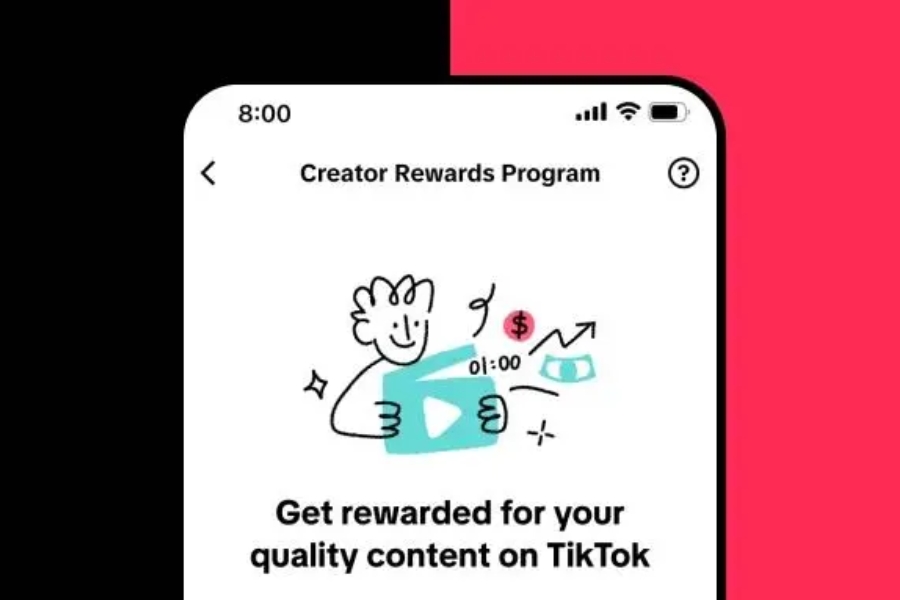
- Newer programs like the Creator Rewards Program can reach $0.40–$1 per 1,000 views, depending on performance and eligibility
However, not all views are paid. TikTok only rewards qualified views, which depend on factors like:
- Watch time
- Video length (typically over 1 minute for newer programs)
- Audience location
- Engagement quality
This is why two videos with similar views can generate very different earnings—or none at all.
2.2 How Much TikTok Pays Per 1 Million Views
At scale, earnings are still relatively modest.
Most estimates suggest:
- $20 to $400 per 1 million views
- In rare cases, up to $1,000+ per million views under ideal conditions
The wide range exists because:
- Not all views are monetized
- Payout rates vary by region and audience
- Engagement and watch time heavily impact earnings
In many cases, even videos with millions of views generate little to no direct revenue.
2.3 Why TikTok Pays Less Than Other Platforms
Compared to platforms like YouTube, TikTok’s payouts are significantly lower—and this is by design.
Several structural factors explain this:
- Short-form content: Videos are typically short, limiting ad exposure
- Fewer ad placements: Less opportunity to insert ads compared to long-form content
- Lower advertiser value per impression: Short engagement cycles reduce ad effectiveness
- Strict eligibility rules: Only qualified views count toward earnings
Because of these limitations, TikTok cannot generate as much ad revenue per viewer—and therefore shares less with creators.
3. What Affects TikTok Earnings?
TikTok earnings are not just based on views. In fact, two creators with similar view counts can earn completely different amounts.
This is because TikTok pays based on performance quality and eligibility, not raw reach.
Here are the main factors that influence how much TikTokers make:
3.1 Engagement and Watch Time
One of the most important factors is how people interact with your content.
TikTok prioritizes:
- Longer watch time
- Higher completion rates
- Strong engagement (likes, comments, shares)
Videos that keep viewers watching longer are more likely to qualify for monetization and generate higher payouts.
3.2 Qualified Views vs Total Views
Not all views are counted for earnings.
TikTok only pays for qualified views, which depend on criteria such as:
- Minimum watch duration
- Authentic engagement (not bots or low-quality traffic)
- Compliance with platform guidelines
This is why a video with 1 million views might earn significantly less than expected—or nothing at all.
3.3 Audience Location
Where your audience is based has a direct impact on earnings.
Views from countries with higher advertising demand (such as the US, UK, or Canada) typically generate more revenue than views from lower CPM regions.
This affects both:
- TikTok payouts
- Brand deal opportunities
3.4 Content Niche
Some niches are more profitable than others because they attract higher-paying advertisers.
High-paying niches often include:
- Personal finance
- Technology and software
- Business and entrepreneurship
- Health and fitness
These niches tend to have higher advertiser demand, which can increase both RPM and sponsorship rates.
3.5 Program Eligibility
Not every creator can access TikTok’s monetization features.
To qualify for programs like the Creator Rewards Program, creators typically need to meet requirements such as:
- Minimum follower count (e.g. 10,000+)
- Minimum recent views (e.g. 100,000 views in the last 30 days)
- Account in good standing
- Availability in supported countries
If a creator is not eligible, they will earn nothing from TikTok directly—regardless of how many views they get.
4. How Much Do TikTokers Make by Followers?
A common assumption is that more followers automatically lead to higher income. In reality, follower count is a weak predictor of earnings on TikTok.
While having a larger audience can increase opportunities, income depends far more on how effectively a creator monetizes that audience.
4.1 Estimated Earnings by Follower Count
Based on industry benchmarks and creator reports, here’s a general overview:
- 10K followers: $0 – $500/month
- 50K followers: $100 – $2,000/month
- 100K followers: $200 – $5,000/month
- 1M+ followers: $1,000 – $20,000+/month
These ranges vary significantly depending on niche, engagement, and monetization strategy.
4.2 Why Followers Don’t Equal Income
Follower count can influence credibility, but it does not guarantee revenue.
There are several reasons for this:
- Low engagement: A large audience with low interaction rarely converts
- Audience mismatch: Followers may not be interested in paid offers
- No monetization system: Without products or partnerships, there’s nothing to sell
In many cases, creators with smaller but more targeted audiences earn more than those with large but passive followings.
4.3 What Actually Matters More Than Followers
Instead of focusing only on follower count, successful creators prioritize:
- Audience trust: Are people willing to take action based on your content?
- Problem-solution fit: Do you address a specific need?
- Monetization strategy: Do you have clear ways to generate income?
These factors have a much greater impact on earnings than the size of an audience alone.
5. How TikTokers Actually Make Money
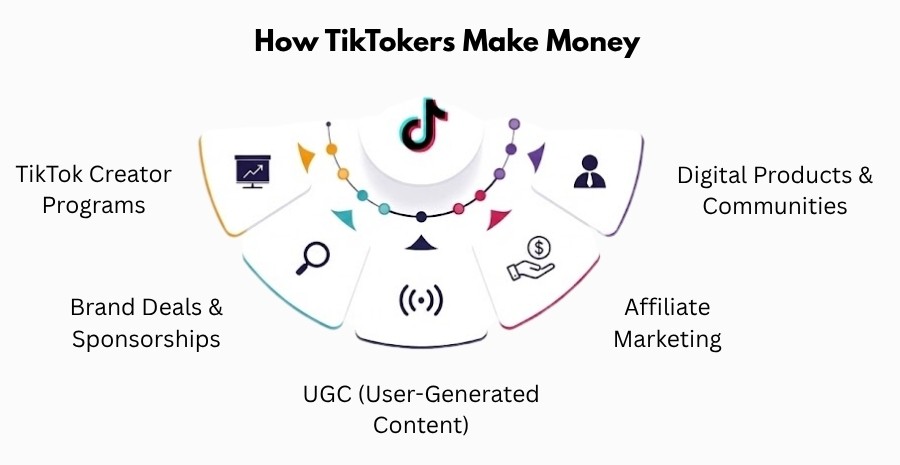
While TikTok does offer built-in monetization, most creators earn the majority of their income outside of views.
In reality, successful TikTokers rely on multiple revenue streams rather than depending on a single source. Each stream plays a different role—from short-term income to long-term, scalable earnings.
5.1 TikTok Creator Programs
TikTok provides several native monetization options for creators, including the Creator Rewards Program, TikTok Pulse, and LIVE monetization features.
The Creator Rewards Program pays creators for original videos over one minute long, based on qualified views, engagement, and audience factors. TikTok Pulse, on the other hand, is an ad revenue-sharing program available to top-performing creators—typically those in the top 4% of content on the platform. Meanwhile, TikTok LIVE allows creators to earn through virtual gifts, tips, and subscriptions from viewers.
According to TikTok’s official monetization documentation, these programs are designed to reward high-quality content. However, earnings are often inconsistent and depend heavily on eligibility, performance, and region.
5.2 Brand Deals and Sponsorships
Brand partnerships are one of the most significant income sources for TikTok creators.
Companies pay creators to promote products or services through sponsored content, often integrated naturally into their videos. Unlike platform payouts, these deals are negotiated directly and can vary widely in value.
Industry benchmarks from Influencer Marketing Hub and Statista suggest that:
- Micro-influencers (10K–50K followers) typically earn between $50 and $500 per post
- Mid-tier creators (50K–500K followers) can earn between $500 and $5,000
- Large creators (500K+ followers) may charge $5,000 to $20,000 or more per post
These rates depend on factors such as niche, engagement rate, audience trust, and content quality.
5.3 UGC (User-Generated Content) Creation
User-generated content (UGC) has become one of the fastest-growing income streams for TikTok creators.
Instead of publishing content to their own audience, creators produce videos for brands to use in advertisements or on their own social channels. Payment is typically based on content production rather than performance.
Based on creator economy reports and UGC market benchmarks:
- Beginner creators often earn $100–$200 per video
- Intermediate creators earn around $200–$500
- Experienced creators can charge $500 or more per video
Because UGC is not tied to views or virality, it offers a more predictable and stable income compared to platform payouts.
5.4 Affiliate Marketing (TikTok Shop and Beyond)
Affiliate marketing allows creators to earn commissions by promoting products through links or integrated shopping features.
TikTok Shop has made this model more accessible by enabling creators to tag products directly in their videos. In addition, many creators use external affiliate platforms to diversify their income.
According to Statista, 78% of consumers have discovered new products through creator content, highlighting the effectiveness of this monetization model.
Income from affiliate marketing varies depending on product pricing, commission rates, and how well the content aligns with audience intent.
5.5 Digital Products, Courses, and Communities
Some of the most stable and scalable income comes from monetizing outside of TikTok.
Creators with expertise or a specific skill set often use TikTok as a discovery channel, then direct their audience toward products they own—such as courses, coaching programs, or paid communities.
This model allows creators to:
- Set their own pricing
- Build recurring revenue streams
- Reduce reliance on algorithms and platform changes
Unlike brand deals or affiliate income, which can fluctuate, owned products provide more control and long-term sustainability.
6. Why Most TikTokers Don’t Make Much Money
Despite TikTok’s massive popularity, most creators earn very little from the platform. This isn’t because they lack effort—it’s because of how TikTok’s monetization system actually works.
One of the biggest limitations is low payouts. According to Influencer Marketing Hub, TikTok creators typically earn between $0.02 and $1 per 1,000 views, depending on the program and video performance. Since only qualified views are counted, actual earnings are often lower than expected.
Another issue is how unpredictable reach can be. TikTok’s algorithm plays a major role in content distribution, and performance can vary significantly from one video to another. This makes income unstable, especially for creators relying only on views.
There are also structural limitations tied to short-form content. Compared to long-form platforms like YouTube, TikTok offers fewer ad placements and less time to generate revenue per viewer. As a result, advertiser spending per impression is lower, which directly affects creator payouts (Statista, 2024).
On top of that, many creators underestimate how difficult it is to sustain growth. Constant posting, shifting trends, and performance pressure often lead to burnout. Data from Circle’s 2026 Community Trends Report shows that 25.8% of creators report burnout, largely due to inconsistent reach and the need to stay constantly active.
Most importantly, many creators rely too heavily on a single income source—views. Without diversifying into other revenue streams, even viral content rarely translates into meaningful or consistent income.
7. The Reality: TikTok Is a Discovery Tool, Not an Income Engine
TikTok is extremely powerful for reach. It can put your content in front of thousands—or even millions—of people in a very short time.
However, that reach does not automatically translate into income.
The platform is designed for discovery and engagement, not for long-term monetization. While creators can earn through TikTok’s native programs, the payouts are relatively low and inconsistent compared to other revenue sources.
This is why many experienced creators treat TikTok as a top-of-funnel channel rather than the place where their business lives.
In practice, TikTok works best when it is used to:
- Attract attention
- Build awareness
- Generate interest
From there, the goal is to move the audience to platforms or assets you control, such as email lists, communities, or products.
Without this transition, creators remain dependent on:
- Algorithm changes
- Fluctuating reach
- Limited monetization options
The key distinction is simple: Attention is rented. Revenue is built elsewhere.
8. The Smart Monetization Model for TikTok Creators
If TikTok is best used for discovery, the next step is building a system that turns attention into actual revenue.
The most effective creators don’t rely on a single income stream. Instead, they combine multiple monetization methods based on how much control and scalability they want.
8.1 TikTok → Email → Product Funnel
A common and effective model is moving audiences from TikTok to platforms you own.
The flow typically looks like this:
- Use TikTok to attract attention and grow reach
- Capture interested viewers through an email list
- Convert them into customers through products or services
Email plays a critical role here because it allows creators to communicate directly with their audience without relying on algorithms. It also provides a space to build trust over time and introduce offers more effectively.
8.2 Choosing the Right Revenue Mix
Not all monetization strategies require the same level of effort or offer the same level of control.
Creators generally operate across three levels:
- Low-effort monetization focuses on speed and simplicity. This includes affiliate links or TikTok Shop, where creators promote existing products and earn commissions. It requires minimal setup but offers limited control and fluctuating income.
- Mid-level monetization involves direct collaboration with brands. UGC creation and sponsorships fall into this category. These typically offer higher payouts per project, but income depends on deal flow and client availability.
- High-leverage monetization is built around owned products. This includes courses, coaching, and paid communities. While it requires more effort upfront, it provides greater control, scalability, and the potential for recurring revenue.

Choosing the right revenue mix to make money on TikTok
Turn Your TikTok Influence Into Real Revenue
Getting views on TikTok is easier than ever—but turning those views into consistent income is where most creators struggle.
Instead of relying on unpredictable payouts or brand deals, the real opportunity lies in building something you actually own. That means validating your ideas, understanding what your audience is willing to pay for, and turning your knowledge into products that convert.
With SprouX, you can do exactly that. From testing demand to launching your course or digital product, SprouX helps you move from guessing to building with confidence.
If you’re serious about monetizing your TikTok audience, don’t just focus on content—focus on creating something that delivers real value. Start today with SprouX!
9. FAQs