Most creators operate on a dangerous assumption: if I like this idea, my audience will too. You spend weeks filming a video or months building a digital product, only to realize nobody actually asked for it. This isn't a lack of talent—it is a lack of data.
While intuition is a great starting point, it is a terrible foundation for a business. Most creators don’t lack ideas; they lack the specific insights needed to separate a hobby from a high-earning asset. To build something that people actually pay for, you need to stop guessing and start listening. This guide will show you how to choose and use the right market research tools to decode your audience's behavior and demand.
1. Why Creators Need Market Research Tools
In the creator economy, content is not the same thing as insight. You might have a video that goes viral, but that doesn't mean you understand why it worked or what those viewers want to buy next. High audience growth is a vanity metric if it doesn't lead to a deeper understanding of your followers.
Market research tools are the bridge between being a performer and being a business owner. They allow you to:
- Identify Patterns: Move beyond individual comments to see what topics consistently trigger engagement across your niche.
- Decode Behavior: Understand not just what people watch, but where they go after they finish your content and what problems they are trying to solve.
- Reduce Guesswork: Instead of launching a product and hoping for the best, you can use data to confirm that a specific pain point exists before you ever open Canva or Notion.
By using these tools, you shift from shouting into a void to having a focused conversation with a market that is already looking for a solution.

2. What to Look for in Market Research Tools (for Creators)
Not all research tools are built with creators in mind. Many platforms are designed for massive enterprise marketing teams with dedicated data analysts. As a creator or solopreneur, you don't need complex data modeling; you need actionable signals.
When selecting your toolkit, focus on these four essential criteria:
- Audience Insight over Raw Analytics: Standard analytics tell you how many people clicked a button. Market research tools should tell you who those people are, what other creators they follow, and what specific language they use to describe their frustrations.
- Trend and Topic Discovery: The tool should help you look forward, not just backward. It needs to identify emerging topics and "content gaps" where audience interest is high but the existing solutions or content are low quality.
- Behavioral Signals: Look for tools that track real-world actions, such as what people are searching for on Google, which links they click in Reddit threads, or what products they are already buying on platforms like Gumroad or Amazon.
- Simplicity and Speed: If a tool takes three days to master, you won't use it. The best tools for creators offer a clean interface that allows you to get a "pulse check" on an idea in fifteen minutes or less.
Your goal is to find tools that provide a clear window into your audience's mind without requiring a degree in data science.

3. Types of Market Research Tools for Creators
To build an effective research stack, you need to understand that different tools answer different questions. Rather than using every platform available, successful creators categorize their tools by the type of information they provide. This prevents data overwhelm and ensures you are using the right instrument for the task at hand.
Here are the five primary categories of market research tools for creators:
3.1 Audience Research Tools
These tools help you understand who your audience is and what they care about—beyond what you can see from surface-level engagement.
They are particularly useful for uncovering:
- Preferences, interests, and motivations
- Direct feedback on ideas or topics
- Perceived problems from the audience’s perspective
Unlike passive data sources, audience research tools rely on direct input, which makes them valuable for validating assumptions about your audience. However, they depend heavily on how well you ask the right questions.
3.2 Content & Trend Research Tools
If audience research tells you who you’re speaking to, content and trend tools help you understand what is currently gaining attention.
These tools track:
- Emerging topics and formats
- Shifts in audience interest over time
- What is already performing across platforms
They are especially useful for identifying momentum—what people are engaging with right now. That said, trends should be interpreted carefully. High engagement does not always indicate long-term value or monetizable demand.
3.3 Search Intent Tools
Search intent tools reveal something far more powerful than engagement: what people are actively looking for.
Instead of reacting to content, you are observing behavior driven by need. When someone searches for something, it usually indicates a problem, a question, or a specific goal they want to achieve.
These tools help you identify:
- Recurring questions and queries
- Specific problems people are trying to solve
- The language your audience naturally uses
For creators, this category is often the closest proxy to real demand—because it reflects intentional action, not passive consumption.
3.4 Social Listening Tools
While search tools capture intent, social listening tools capture conversation.
They allow you to observe what people are discussing in more natural, unfiltered environments—whether that’s comment sections, forums, or social platforms. This provides context that structured data often misses.
With social listening, you can uncover:
- Frustrations and opinions expressed in real time
- Nuanced discussions around specific topics
- Community-driven insights that don’t show up in analytics dashboards
This type of data is less structured, but often more revealing. It shows how people actually think and talk—not just what they click on.
3.5 Analytics Tools
Finally, analytics tools help you understand how your own audience behaves.
These tools track performance across your content, showing you:
- What drives engagement and retention
- Which topics resonate most with your existing audience
- How behavior changes over time
While analytics are essential, they should not be used in isolation. They reflect past performance, not necessarily future opportunity. When combined with the other categories, however, they become much more powerful—helping you connect internal data with external demand signals.

4. Best Market Research Tools for Creators (And How to Actually Use Them)
Once you understand the different types of market research tools, the next step is choosing the right ones. The goal here isn’t to build a complex stack or use every tool available—it’s to pick a small set of tools that give you clear, complementary insights.
Below are some of the most effective market research tools for creators, along with how they fit into your workflow and what they’re actually useful for.
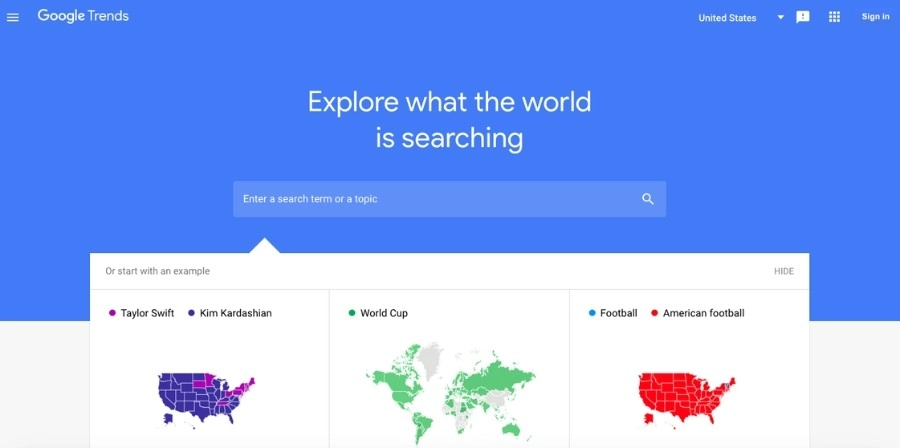
4.1 Google Trends
Google Trends is a free tool that shows how often people search for a topic on Google over time.
Instead of guessing whether something is “growing” or just temporarily popular, you can see real search behavior across different regions and timeframes.
For creators, this is especially useful when you want to:
- Compare multiple ideas before choosing one
- Identify rising vs declining topics
- Validate whether a niche has long-term interest
However, Google Trends doesn’t show depth—it shows direction. It tells you what is gaining attention, but not necessarily why.
Google Trends
4.2 AnswerThePublic
AnswerThePublic takes Google search data and turns it into actual questions people are typing. Instead of abstract keywords, you get structured queries like “how,” “why,” or “what,” which are often much closer to real user intent.
This makes it particularly valuable for:
- Understanding how people frame their problems
- Generating content ideas based on real questions
- Spotting recurring patterns in audience curiosity
For creators, this tool bridges the gap between raw data and usable insight—it helps you think in terms of problems, not just topics.
4.3 SparkToro
SparkToro is designed to help you understand where your audience spends time and what they pay attention to. Instead of focusing purely on keywords, it maps out behavior across platforms.
With SparkToro, you can discover:
- What websites, channels, or accounts your audience follows
- Which topics they engage with across the internet
- How audiences cluster around specific interests
This is particularly useful when you’re trying to go beyond your own platform and understand your audience in a broader context.
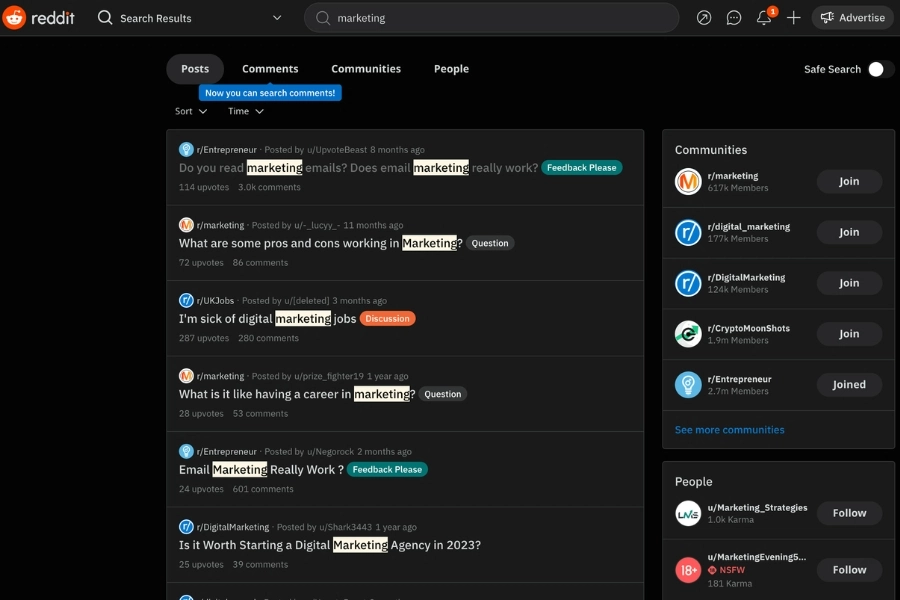
4.4 Reddit
Reddit is a community platform where people openly discuss problems, experiences, and opinions.
For market research, it gives you access to raw, unfiltered conversations where people openly discuss their problems, frustrations, and experiences.
By exploring relevant subreddits, you can:
- Identify repeated pain points
- Understand how people describe their struggles
- Observe real-world discussions that don’t appear in analytics tools
The value here isn’t scale—it’s depth. Reddit helps you understand the language and emotion behind problems, which is critical when building content or products that resonate.
4.5 TikTok Creative Center
For creators focused on short-form content, TikTok Creative Center provides direct insight into what is trending on the platform.
You can analyze:
- Trending hashtags, sounds, and topics
- High-performing content formats
- Regional differences in content performance
This is useful for understanding attention dynamics—what people are engaging with right now. However, like most trend tools, it should be used alongside deeper research methods to avoid chasing short-lived spikes.
4.6 YouTube Analytics
YouTube Analytics offers one of the most detailed views of audience behavior available to creators. It goes beyond surface metrics and shows how people interact with your content over time.
Key insights include:
- Watch time and retention patterns
- Traffic sources (how people find your content)
- Audience demographics and returning viewers
This helps you understand not just what performs, but how and why people stay engaged—which is crucial when refining your content strategy.
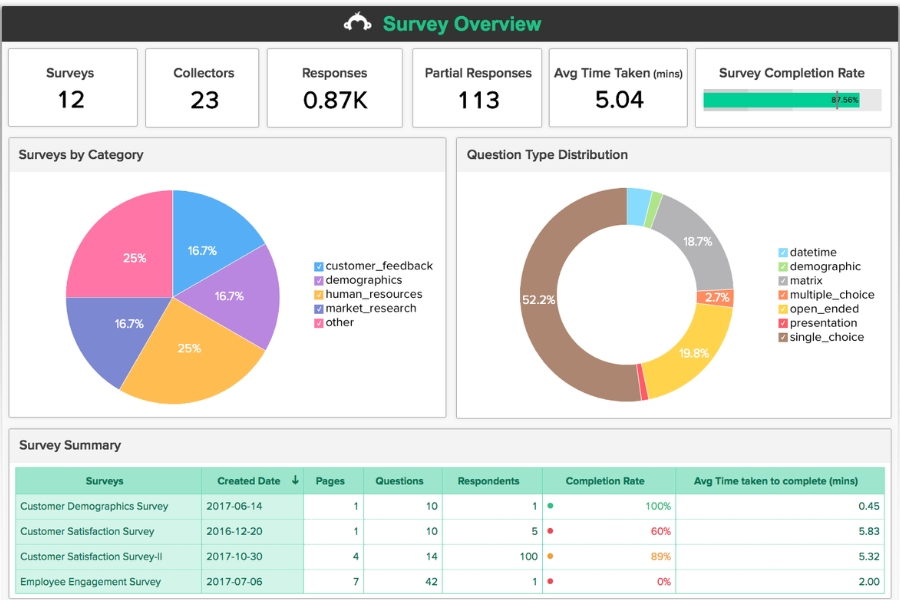
4.7 SurveyMonkey / Typeform
Survey tools like SurveyMonkey and Typeform allow you to ask your audience direct questions and collect structured responses. While they require more effort and financial resources to execute properly, they provide clarity that passive data cannot.
You can use them to:
- Test assumptions about audience needs
- Gather qualitative feedback on ideas
- Understand preferences in a structured way
The key is asking the right questions. Poorly designed surveys lead to misleading insights, while well-structured ones can reveal exactly what your audience is thinking.
5. How to Use Market Research Tools
Having access to the right tools is one thing. Knowing how to use them together is what actually creates value.
Most creators either jump between tools without a clear goal or rely on a single source of data. Both approaches lead to fragmented insights. A more effective method is to follow a simple workflow—where each step answers a specific question before moving to the next.
Here’s a practical way to approach market research as a creator:
Step 1: Start with Trends to Understand Direction
Before going deep into research, you need to understand where attention is moving.
Tools like Google Trends or TikTok Creative Center help you identify:
- Whether a topic is growing or declining
- What is currently gaining traction
- Which ideas are worth exploring further
At this stage, you are not validating anything—you are simply filtering out weak directions.
Step 2: Identify Real Questions and Problems
Once you have a general direction, the next step is to understand what people are actually trying to figure out.
This is where AnswerThePublic becomes useful. It helps you see how people phrase their questions, which often reveals underlying problems.
To go deeper, platforms like Reddit allow you to observe real conversations. Here, you can identify:
- Repeated frustrations
- Common “how do I…” questions
- Specific situations people struggle with
This step shifts your focus from topics to problems.
Step 3: Understand Your Audience Context
At this point, you know what people are talking about. Now you need to understand who they are and where they spend time.
Tools like SparkToro help you map:
- What platforms your audience uses
- Which creators or content they follow
- What influences their attention
This gives you context—so you’re not creating in isolation.
Step 4: Validate Insights with Your Own Data
External research gives you direction, but your own data provides confirmation.
Using YouTube Analytics (or similar platform analytics), you can:
- Check if your audience responds to similar topics
- Identify patterns in engagement and retention
- See what already resonates with your existing audience
This step helps you connect market signals with your own content performance.
Step 5: Get Direct Feedback When Needed
Finally, when you want clarity on a specific idea, you can collect direct input.
Tools like SurveyMonkey or Typeform allow you to:
- Ask targeted questions
- Gather structured responses
- Confirm assumptions before moving forward

6. From Research to Action: Turning Insights Into Better Decisions
From Data → Insight
- A trending topic doesn’t automatically mean opportunity
- A popular question doesn’t always mean urgency
- High engagement doesn’t guarantee demand
- Problems that appear repeatedly across platforms
- Questions that show up in different formats (search, comments, discussions)
- Topics that maintain interest over time, not just spike briefly
- Instead of asking: “What should I create next?”
- You start asking: “Which problem is most consistent, specific, and relevant to my audience?”
- You know what problem you’re addressing
- You understand how your audience talks about it
- You’ve seen signals that the problem actually exists

Conclusion
Market research tools don’t give you instant answers, and they don’t replace creativity. What they do is much more valuable: they help you see patterns you would otherwise miss, understand your audience beyond surface-level engagement, and make decisions based on signals instead of assumptions.
When used correctly, these tools allow you to step back from the constant cycle of posting and reacting, and start approaching your work with more intention. Instead of asking what might perform well, you begin to understand what actually matters to the people you’re trying to reach.
That shift—small as it seems—is what separates creators who consistently grow and monetize from those who stay stuck experimenting without direction.
At the end of the day, market research isn’t about collecting more data. It’s about reducing guesswork, so that every piece of content, every idea, and every offer is built on a clearer understanding of your audience.
If you already have the tools but still find yourself unsure about what to build next, the problem isn’t access to data—it’s turning that data into clear direction.
SprouX helps you bridge that gap by transforming raw insights into validated ideas, so you can move forward with confidence instead of second-guessing every decision.
Stop guessing what your audience wants. Start building with clarity.